

Need a high risk merchant account approved fast? Contact Bridge Capital Partners now.
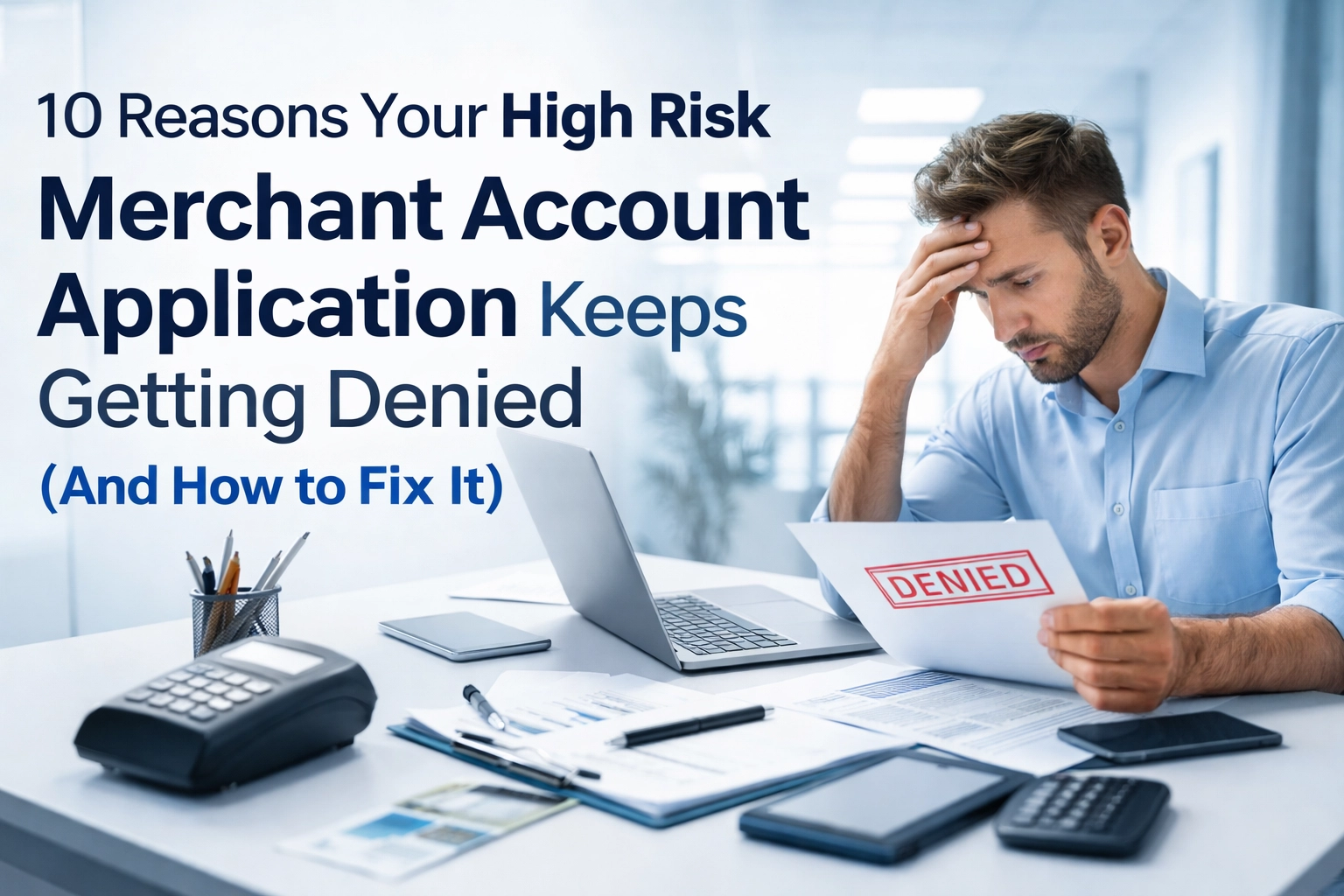
Denial after denial. Your high risk merchant account application keeps getting rejected. You need payment processing to run your business. Traditional processors keep saying no.
This guide covers the 10 most common reasons for denial. Each section includes the fix.
Stop guessing. Start getting approved.
1. Poor Personal Credit History
Processors check personal credit. Bad credit triggers automatic rejection.
Red flags include:
- Active bankruptcies
- Credit scores below 500
- Collection accounts
- Late payment histories
- No credit history at all
The Fix:
Work with bad credit merchant account providers. These processors specialize in businesses with credit challenges. If you have a business partner with good credit, add them to the application. Some processors accept personal guarantees with conditions like upfront reserves or rolling reserves.
2. High Chargeback History
Chargebacks kill applications. Card associations set the threshold at 1%. Exceed it and expect denial.
Previous account closures due to chargebacks follow you. Processors share this information.
The Fix:
Disclose past chargeback issues upfront. Show what you've done to fix the problem. Document your chargeback management tools. Demonstrate improved customer service protocols. Processors respect transparency and concrete mitigation steps.

3. High Decline Rates
Card associations cap decline rates at 10%. Exceed this threshold and processors see risk.
High decline rates suggest fraud attempts, stolen card testing, or poor customer verification.
The Fix:
Review your payment processing practices before reapplying. Implement address verification systems (AVS). Add CVV requirements. Use velocity checks to catch suspicious patterns. Get your decline rate under control first.
4. Prohibited or High-Risk Business Type
Certain industries face automatic high-risk classification:
- Adult entertainment
- CBD and nutraceuticals
- Telemarketing
- Subscription services
- Travel agencies
- Firearms dealers
- Debt collection
- Online gaming
Traditional processors reject these categories regardless of your track record.
The Fix:
Stop applying to traditional providers. Work exclusively with processors experienced in your specific industry. High-risk specialists have banking relationships built for your business type. Yes, fees run higher. But you get approved.
For debt collection businesses, see our Debt Collection Payment Processing 101 guide.
5. Processing Volumes Don't Match Your Business Type
Underwriters compare your requested volume against industry norms. A small consulting firm requesting $500,000 monthly raises red flags.
Inflated projections suggest either fraud or unrealistic expectations. Both lead to denial.
The Fix:
Base projections on realistic numbers. Match your expected volumes to past processing history. New businesses should provide evidence of pre-launch demand. Keep projections aligned with industry standards for your business size and type.

6. High-Ticket Items or Suspicious Business Model
Luxury goods, expensive jewelry, and high-ticket services attract extra scrutiny. These categories see elevated fraud and chargeback rates.
Business models frequently targeted for fraud: dropshipping, digital goods, coaching programs: face similar skepticism.
The Fix:
Provide additional documentation. Explain your customer base clearly. Show how you verify customer identities. Document why high-ticket items are essential to your model. The more legitimacy you demonstrate, the better your approval odds.
7. Missing or Insufficient Business Documentation
Incomplete applications get rejected. Processors require:
- Bank statements (typically 3-6 months)
- Government-issued ID
- Business license
- Previous merchant processing statements
- Tax returns
- Articles of incorporation
Missing any required document delays or kills your application.
The Fix:
Gather everything before you apply. Include additional documentation proactively. Website information showing your refund policy, privacy policy, and terms of service demonstrates professionalism. Complete applications move faster through underwriting.
8. Inadequate Website or Privacy Safeguards
Your website represents your business to underwriters. They check for:
- Clear refund policy
- Privacy policy
- Terms and conditions
- HTTPS encryption
- PCI DSS compliance indicators
- Legitimate contact information
- Professional design
Missing policies or security gaps signal amateur operations or potential fraud.
The Fix:
Update your website before applying. Display refund and privacy policies prominently. Ensure your payment page uses HTTPS. Add physical address and phone number to your contact page. Make your site look like a real business because you are one.

9. Presence on the MATCH/TMF List
The MATCH list (Member Alert to Control High-Risk Merchants) is the payment industry's blacklist. Previous account terminations land you here.
Being on MATCH prevents approval for 5-7 years. Most processors won't touch you.
The Fix:
This restriction is largely irreversible during the waiting period. Focus on rebuilding your business reputation. Document compliance improvements. Some specialized high-risk processors work with MATCH-listed merchants under strict conditions. Expect higher fees and reserve requirements.
For strategies on navigating this challenge, read our Survival Guide for High-Risk Merchant Accounts in 2026.
10. Insufficient Transaction Volume
New businesses face a catch-22. Processors need transaction history to calculate chargeback ratios. No history means no data. No data means elevated risk.
Insufficient monthly volume prevents accurate risk assessment.
The Fix:
Build transaction history before applying if possible. Use alternative payment methods initially to establish records. Provide projections backed by evidence: signed contracts, pre-orders, market research. Show processors you'll achieve sufficient volume to justify their risk.
Common Mistakes That Guarantee Denial
Beyond the 10 reasons above, these errors sabotage applications:
Applying to the wrong processors. Traditional merchant account providers reject high-risk businesses by default. Stop wasting time.
Hiding past issues. Underwriters discover everything. Attempting to conceal chargebacks, terminations, or MATCH status guarantees rejection when discovered.
Submitting multiple applications simultaneously. Each application creates an inquiry. Multiple inquiries signal desperation or deception.
Incomplete financial records. Gaps in bank statements or processing history raise immediate red flags.

How to Get Approved
Work with specialists. High-risk processors maintain banking relationships designed for businesses in your category. They understand your industry's challenges.
Present your business correctly. Provide underwriters with evidence of legitimacy. Your website, bank statements, and processing history tell your story.
Be transparent. Disclose everything. Processors work with honest businesses that demonstrate concrete risk mitigation steps.
Prepare documentation thoroughly. Complete applications with all required documents move faster and face fewer objections.
Align with card association requirements. Ensure your business practices meet Visa and Mastercard standards before applying.
Next Steps
Stop getting denied. Work with a processor that understands high-risk businesses.
Bridge Capital Partners specializes in high risk merchant accounts across challenging industries. Our banking relationships and underwriting expertise get applications approved.
Ready to get approved?
Contact Bridge Capital Partners | View Our Pricing




Leave A Comment