

Contact Bridge Capital Partners now. Call for immediate high-risk merchant account compliance review. Don't wait until penalties hit.
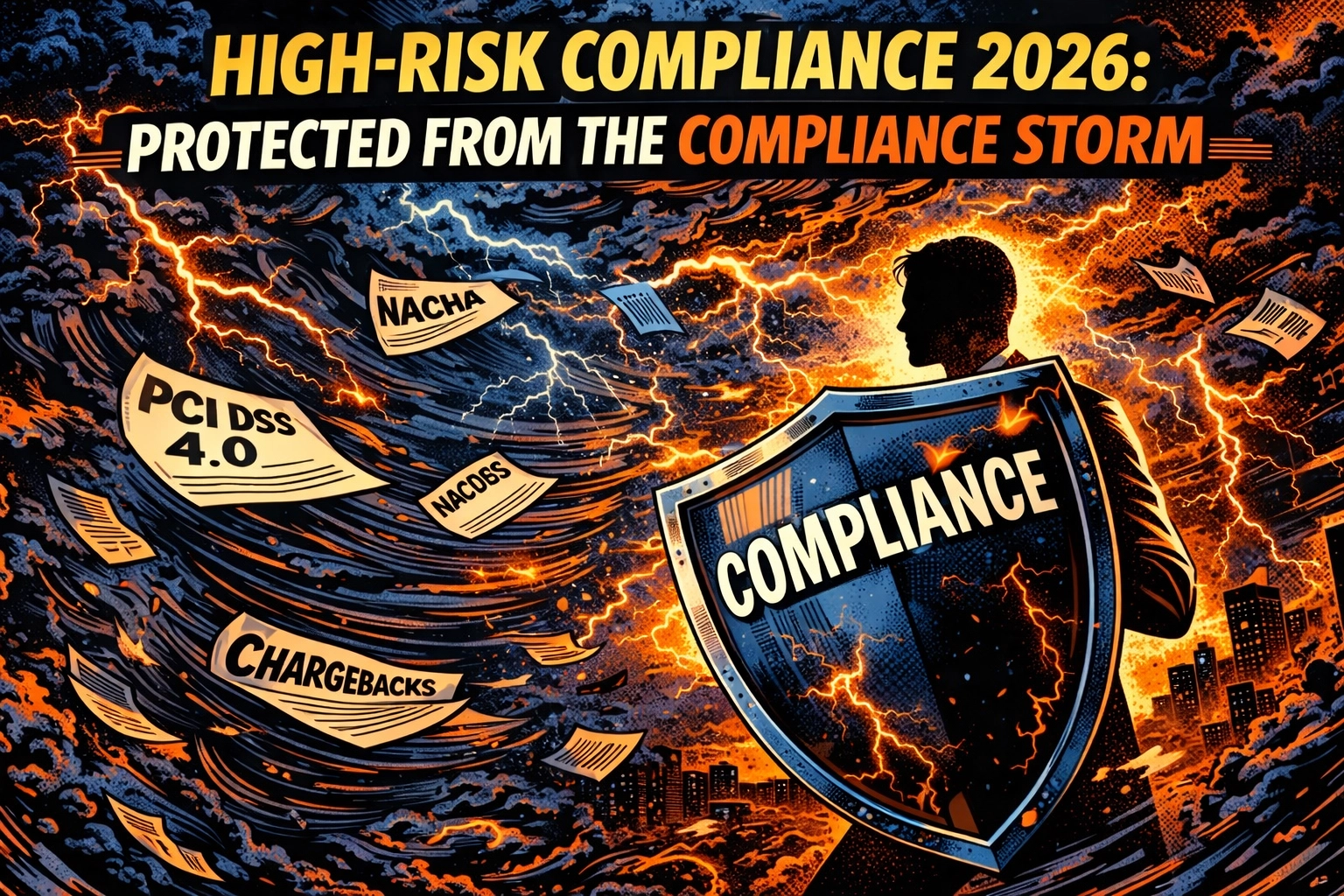
The 2026 Compliance Storm Is Here
Your high-risk merchant account faces three major compliance deadlines in 2026. Miss them and you risk account termination, fines, or frozen funds.
March 20, 2026: NACHA fraud monitoring rules take effect.
Q1 2026: PCI DSS v4.0 becomes mandatory for all e-commerce sites.
Ongoing: Enhanced security protocols and real-time risk monitoring intensify.
Think of compliance as your business's armor. Without it, you're exposed.

PCI DSS v4.0: Your New Security Shield
PCI DSS v4.0 isn't optional. Every merchant processing card payments must comply by early 2026.
What changed:
- Script-integrity checks on all payment pages
- 24-hour change-detection systems required
- Multi-factor authentication mandatory
- Updated password protocols
- Enhanced encryption standards
Action items:
Install change-detection software on your payment pages. Configure alerts for any unauthorized modifications. Review your authentication systems now: single-factor login won't cut it anymore.
Annual PCI DSS certification is required. Schedule quarterly network scans with approved vendors. These aren't suggestions. They're requirements.
Merchants failing compliance face account closure. Processors won't risk their reputation on non-compliant businesses.
NACHA Rules: The ACH Protection Layer
NACHA's March 2026 amendments target fraud monitoring for ACH transactions. High-risk merchants processing both card and ACH payments need dual compliance systems.
Key requirements:
- Enhanced transaction monitoring protocols
- Suspicious activity reporting within specified timeframes
- Return rate management controls
- Customer verification procedures
ACH fraud monitoring operates differently than card processing. Implement separate tracking systems for each payment type.
Rolling reserves apply to ACH accounts too. Expect 5-15% of transaction volume held for 90-180 days.

Technical Security Requirements: Building Your Fortress
Compliance isn't just paperwork. Technical infrastructure matters.
Required systems:
Encryption: All cardholder data encrypted in transit and at rest. No exceptions.
Firewalls: Network-level protection between payment systems and public networks. Configure properly or face breaches.
Security testing: Regular penetration testing and vulnerability scans. Quarterly minimum.
Access controls: Limit system access to essential personnel only. Document everything.
Patch management: Critical security updates applied within 30 days maximum.
Outsource to specialists if needed. Security breaches cost more than compliance services.
The Billing Descriptor Trap
Mismatched billing descriptors trigger chargebacks. Your website says "Premium CBD Products" but the customer's statement shows "Global Ventures LLC." That's an instant dispute.
Fix this now:
Match your billing descriptor exactly to your business name and marketing. Keep descriptions clear and recognizable. Include customer service contact information.
Banks flag descriptor mismatches as fraud indicators. Your account risk rating increases. Approval rates drop.
Review your current descriptor. Change it if there's any confusion potential.

Real-Time Risk Monitoring: The Always-On Guardian
Banks reassess high-risk accounts continuously. Volume spikes, dispute increases, or unusual transaction patterns trigger reviews.
What triggers scrutiny:
- Transaction volume increases over 30% month-over-month
- Chargeback ratios above 1%
- Sudden changes in average ticket size
- Geographic transaction pattern shifts
- Multiple failed transactions from same customers
Plan growth strategically. Notify your processor before major promotions or seasonal volume increases. Sudden spikes look suspicious even when legitimate.
Rolling Reserves: The Required Safety Net
Most high-risk accounts now include rolling reserves as standard practice. Expect 5-20% of transaction volume held for 90-180 days.
Cash flow planning essentials:
Calculate available working capital with reserves factored in. Budget for the delay between transaction processing and fund release.
Reserves aren't penalties. They're risk management tools protecting processors from liability. High-performing accounts may negotiate lower reserve percentages after 6-12 months of clean processing history.
Maintain reserve awareness in your financial planning. Inadequate cash flow causes more business failures than lack of sales.
Multi-Account Strategy: Your Backup Plan
Single-account dependence creates vulnerability. Diversify processing across multiple merchant accounts and payment types.
Strategic options:
Multiple merchant accounts: Split volume across different processors. One account closure doesn't kill your business.
International acquiring: Offshore merchant accounts offer backup processing and sometimes better rates for certain industries.
Alternative payment rails: Stablecoins, Open Banking transfers, and ACH provide non-card payment options.
Payment facilitators: Consider hybrid approaches combining direct merchant accounts with payment facilitator services.
Diversification costs more upfront but provides critical business continuity protection.
Dispute Management: Your First Line of Defense
Chargebacks destroy high-risk merchant accounts faster than any other metric. Keep dispute ratios below 1%.
Prevention tactics:
- Clear product descriptions and terms
- Responsive customer service
- Easy refund processes
- Transaction confirmation emails
- Delivery tracking for physical products
Most disputes stem from customer confusion or dissatisfaction. Solve problems before they become chargebacks.
Challenge illegitimate disputes aggressively. Provide compelling evidence. Win rates matter.

Compliance Checklist: Action Steps
Complete by March 1, 2026:
- PCI DSS v4.0 assessment scheduled
- Multi-factor authentication implemented
- Script-integrity monitoring installed
- NACHA fraud monitoring protocols established
- Billing descriptor reviewed and updated
- Security testing vendor contracted
- Rolling reserve cash flow modeled
- Backup processing relationships established
Ongoing requirements:
- Quarterly security scans
- Annual PCI certification
- Monthly chargeback ratio monitoring
- Transaction pattern analysis
- Security patch updates
- Staff compliance training
Get Expert Support Now
High-risk compliance isn't DIY territory. Mistakes cost thousands in fines and lost processing ability.
Bridge Capital Partners specializes in high-risk merchant account compliance and setup. Contact us for account review and 2026 compliance planning.
The deadline isn't flexible. Your competition is preparing now. Don't fall behind.
Reach out today. Get started here.









Leave A Comment